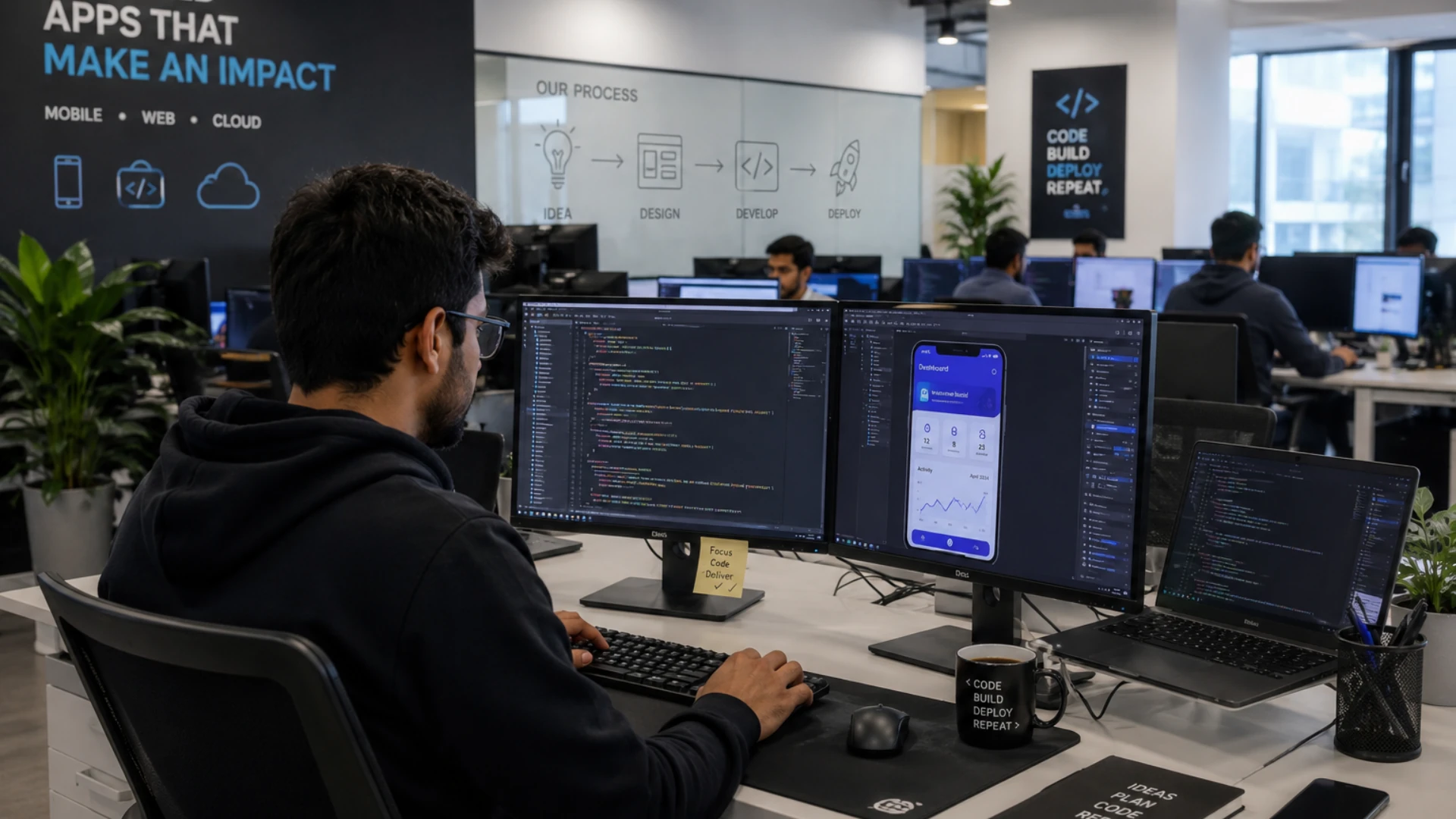
From Prototype to Production - AI-Enhance Delivery in Practice
Our position: measured, not chasing trends
We're not deploying AI because it's fashionable, and we're not the kind of shop that bolts a chatbot onto a landing page and calls it innovation. Boom Software builds custom applications for clients who are trusting us with real product decisions and real codebases, that trust is the thing we protect first, before speed or novelty.
Four principles guide how we use AI in delivery:
AI enhances our developers' judgement, it doesn't replace it
We use it deliberately, on the parts of the process where it earns its place, not by default everywhere
We learn from what we actually ship, not from what the tooling promises in a demo
Client data and code stay under the same access controls and review discipline whether or not AI touched them along the way
Measured doesn't mean slow. Over the past year we've steadily built AI into how we deliver custom software, testing it, keeping what worked, discarding what didn't, and that's built up real muscle memory across the team, the kind you only get from shipping real projects, not reading case studies.
What this looks like day-to-day
For us, "AI-enhanced" doesn't mean AI runs the show. Our default is still the same as it's always been: our developers build the way they'd build without AI in the room, thinking through the problem, writing the code, owning the decisions.
Where AI comes in is timeline pressure. When a deadline is tight and there's a genuine case for moving faster, scaffolding a component, working through a well-understood pattern, drafting a first pass at something repetitive, a developer will bring AI in to help close the gap.
The part that matters more than the AI itself is what happens next: nothing AI produces goes into a client's codebase unreviewed. Every suggestion gets checked against the same standard we'd hold a human contributor to: does it actually work, does it fit the existing code, does it introduce anything we wouldn't have written ourselves. If it doesn't hold up, it doesn't ship. AI here is a way to move faster under pressure, not a shortcut around the judgement that goes into building something properly.
Why we're careful about the claims we make
There's a lot of noise right now about AI making development teams two, three, five times faster. We're not going to add to it with numbers we can't stand behind.
Here's the honest version of where we are: AI isn't running our delivery process. Our developers build the way they always have, and AI gets brought in when there's real time pressure and a genuine case for it, scaffolding something repetitive, working through a well-understood pattern, getting a first draft down faster. It's a tool for specific moments, not a transformation of how we work.
What we can say with confidence is this: every piece of AI-assisted code goes through the same scrutiny as anything a developer writes by hand. Nothing gets merged because "the AI said so." If a suggestion doesn't hold up, doesn't fit the codebase, doesn't handle the edge cases, isn't something we'd be comfortable maintaining, it gets rewritten or thrown out. That discipline is the actual value here, not a headline productivity number.
We'd rather be the shop that tells a client "we used AI to move faster on this piece, and here's exactly how we verified it" than the one promising a multiple we measured once and generalised from. As we use AI more and build up a track record we're confident in, we'll share real examples, with real context, not stripped-down stats designed to impress.
The reality check
We're aware this piece reads more modestly than a lot of what's being written about AI and development right now. That's deliberate. There's no shortage of teams claiming AI made them two or three times faster, and no shortage of clients who've learned to be skeptical of that claim, for good reason.
We'd rather be straightforward about where we actually are: AI helps our developers move faster on specific, well-understood pieces of work, under real time pressure, with every output checked before it ships. That's a smaller claim than "AI transformed our delivery process." It's also one we can actually stand behind.
This is also why our "AI enhances, doesn't replace" principle isn't just a slogan for us, it's the reason we haven't handed AI more of the process than this. A developer still sets the direction, still owns the decisions, still validates the result. We'd rather grow into using AI more as we build confidence in it than overstate where we are today.
What this means for clients
If you're evaluating a development partner and AI comes up in the conversation, we'd rather tell you exactly how we use it than sell you a transformation story. For us, that means: our developers build the way they always have, AI gets brought in under real time pressure on well-understood work, and nothing ships without the same scrutiny we'd apply to code written entirely by hand.
We're not the partner promising the biggest productivity multiple. We're the one who can tell you precisely what AI touched on your project and how we checked it before it went live.
Some clients want AI kept out of the process entirely. Others want us to lean on it wherever it genuinely helps. We can do either, we'd just rather have that conversation honestly than let a headline number do the talking.